Job boards have listed both "Site Reliability Engineer" and "Database Reliability Engineer" for over a decade now, and the titles get treated as near-synonyms often enough that it's worth being precise about what actually separates them. They share a philosophy and a lot of vocabulary - SLOs, toil, automation over manual intervention - but they own different parts of the stack, and confusing the two leads to real staffing mistakes: hiring a generalist SRE and expecting deep PostgreSQL internals knowledge, or hiring a DBRE and asking them to run incident command across forty microservices they've never seen.
Where Both Roles Started
Site Reliability Engineering has a clean origin story. Google founded its SRE organization in 2003 under Ben Treynor Sloss, built on the idea that running production is fundamentally a software problem - you solve operational scale with engineering, not headcount. Google's SRE book and workbook later codified the discipline around a small set of ideas: service level objectives (SLOs) that define how reliable a service needs to be, error budgets that turn "how much risk can we take" into a number both product and ops teams agree on, and toil - manual, repetitive, automatable work - as something to be systematically eliminated rather than staffed up.
DBRE is younger and more specific. It was formalized in 2017 when Laine Campbell and Charity Majors published Database Reliability Engineering with O'Reilly, making the case that the general SRE playbook didn't transfer cleanly to stateful systems. A stateless web server can be killed and replaced in seconds; a database node holding the only copy of a customer's data cannot. Databases needed their own version of the SRE mindset, and the book gave it five guiding principles: Protect the Data (above all else, don't lose it or corrupt it), Self-Service for Scale (give engineering teams safe, automated ways to provision and change databases instead of routing every change through a human), Elimination of Toil, Databases Are Not Special Snowflakes (treat them as configuration-managed, automatable infrastructure like everything else, not as hand-tended pets), and Eliminate the Barriers Between Software and Operations (DBREs sit with engineering teams and review schema changes rather than gatekeeping from a separate silo).
What an SRE Actually Owns
An SRE is a generalist across the whole production stack. Their day-to-day is driven by SLOs: defining them, measuring them, and deciding whether the error budget allows for another risky release this week. They coordinate incident response across services - when a checkout flow breaks, the SRE is often the one pulling together the people who own the API, the queue, the cache, and the database into one incident channel. They plan capacity at the fleet level, own release and change management processes, and build automation that works across the whole platform, not for one specific technology. Depth in any single system is useful but secondary to breadth across all of them.
What a DBRE Actually Owns
A DBRE applies that same discipline - SLOs, automation, systematic toil reduction - narrowly and deeply, to the data layer specifically. GitLab's public job description for the role is a good real-world reference point: their DBREs sit inside the SRE team but are explicitly responsible for PostgreSQL reliability and performance on GitLab.com, reviewing database migrations before they ship, planning capacity for the database tier specifically, and debugging production database issues that span services. The listing asks for years of hands-on PostgreSQL experience and deep internals knowledge - the kind of specialization a generalist SRE role doesn't require.
That specialization is the whole point. Failure modes at the database layer are different from failure modes in a stateless service - replication lag, lock contention, a query plan that flipped from an index scan to a sequential scan after a data shift, a migration that takes an exclusive lock on a hot table. A DBRE's job is building the automation and guardrails - automated failover testing, self-service schema-migration review, backup verification that actually restores rather than just completes - that keep those failure modes from becoming incidents in the first place.
Is DBRE Just a Rebranded DBA?
Not quite, though the lineage is direct. A traditional DBA is an engine specialist with an operational mindset: keep the database stable and available, handle backup and recovery, respond when something breaks. The role is reactive by design and measured on uptime and data integrity.
A DBRE keeps the engine expertise but adds the SRE toolkit on top of it: instead of manually fixing a misconfigured server, a DBRE asks how to make every server in the fleet consistently configured and automatically kept that way. Instead of being the approval gate for every schema change, a DBRE builds the self-service tooling and review process that lets engineering teams ship changes safely without a manual handoff. The metrics shift accordingly - from uptime and ticket count to SLOs, toil reduction, and automation coverage. DBRE is best understood as what happens when DBA expertise absorbs the SRE mindset, rather than as a separate discipline invented from scratch.
Where the Lines Blur
In practice the boundary is fuzzier than the job descriptions suggest, and that's by design - GitLab's own org chart puts DBREs inside the SRE team rather than in a separate database group. When replication lag pages someone at 2 a.m., ownership splits naturally: the SRE on call coordinates the incident and checks whether it's affecting other services, while the DBRE (or whoever is wearing that hat) owns the database-specific root cause and remediation. At smaller companies, one person often does both jobs, and that's fine as long as the responsibilities stay clearly defined rather than blurring into "whoever's free."
When to Hire Which
The practical signal for a dedicated DBRE is a bottleneck, not a headcount target: if engineering ships multiple times a day everywhere except the database, where every schema change still needs a manual review and a maintenance window, that gap is worth a specialist. The signal for a broader SRE hire is scale and uptime commitments outpacing what informal, ad hoc reliability practices can sustain across the whole system. Most companies don't need both roles on day one - they need the discipline that both roles represent, applied wherever the reliability risk is currently concentrated.
Where Pulse Fits
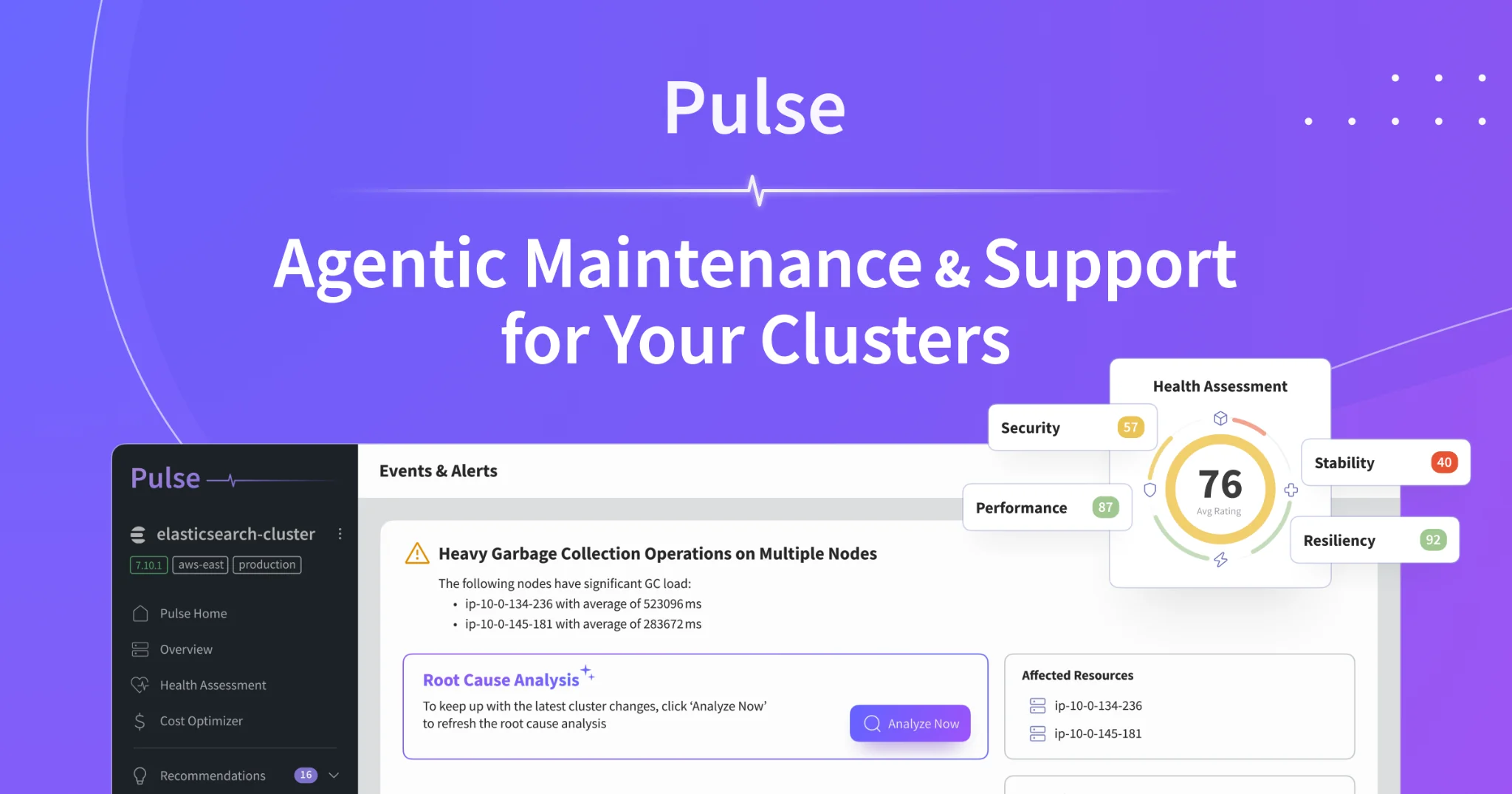
Not every team can justify a dedicated DBRE headcount, and that gap is exactly where Pulse operates. Pulse is a proactive, agentic monitoring platform that watches PostgreSQL alongside search and streaming engines like Elasticsearch, OpenSearch, and ClickHouse, applying the same principles a DBRE would: catching replication lag, lock contention, and capacity issues before they page anyone, tying automated root-cause analysis to the actual query plans and configuration changes behind an incident, and in many cases suggesting or applying the fix directly. For teams that can't yet hire a dedicated database specialist, Pulse gives engineering the DBRE function without the headcount - and for teams that already have one, it removes the toil so that person can spend their time on architecture instead of triage.
The Short Version
SRE and DBRE come from the same reliability engineering philosophy but operate at different altitudes: SRE is broad and cross-service, DBRE is narrow and stateful-system-specific, and DBRE is best understood as DBA expertise fused with the SRE toolkit rather than a role invented independently. Most organizations don't need to pick one - they need to make sure someone, or something, is applying that discipline to the database layer specifically, because that's the layer where "just restart it" stops being a viable incident response.