
DoubleCloud Alternative
DoubleCloud shut down on March 1, 2025. Bring your ClickHouse workload to your own cloud and let Pulse run it like a managed service, without the vendor risk.
What happened to DoubleCloud
DoubleCloud was a managed data platform built on open source: Managed ClickHouse, Managed Kafka, Managed Airflow, Data Transfer, and Visualization. On October 1, 2024 the company stopped accepting new accounts and on March 1, 2025 it shut down completely. In their own words, "the level of service we wanted to provide, our growth ambitions, and the funding we could secure ultimately didn't align."
Every customer had to migrate, and the migration window included a useful detail: DoubleCloud's products were "built on widely adopted open source technologies." That is the part to lean into. The ClickHouse cluster you were running on DoubleCloud is the same ClickHouse you can run anywhere else, with the same SQL, the same engines, and the same on-disk format.
The natural successor is BYOC ClickHouse: run ClickHouse open source inside your own cloud account, and let Pulse provide the SRE layer that DoubleCloud used to give you. No vendor risk, no surprise shutdown, no proprietary fork.
Optimizing Search and Analytics For Leading Brands

Why BYOC ClickHouse
Open source, in your cloud, with managed-service operations
-
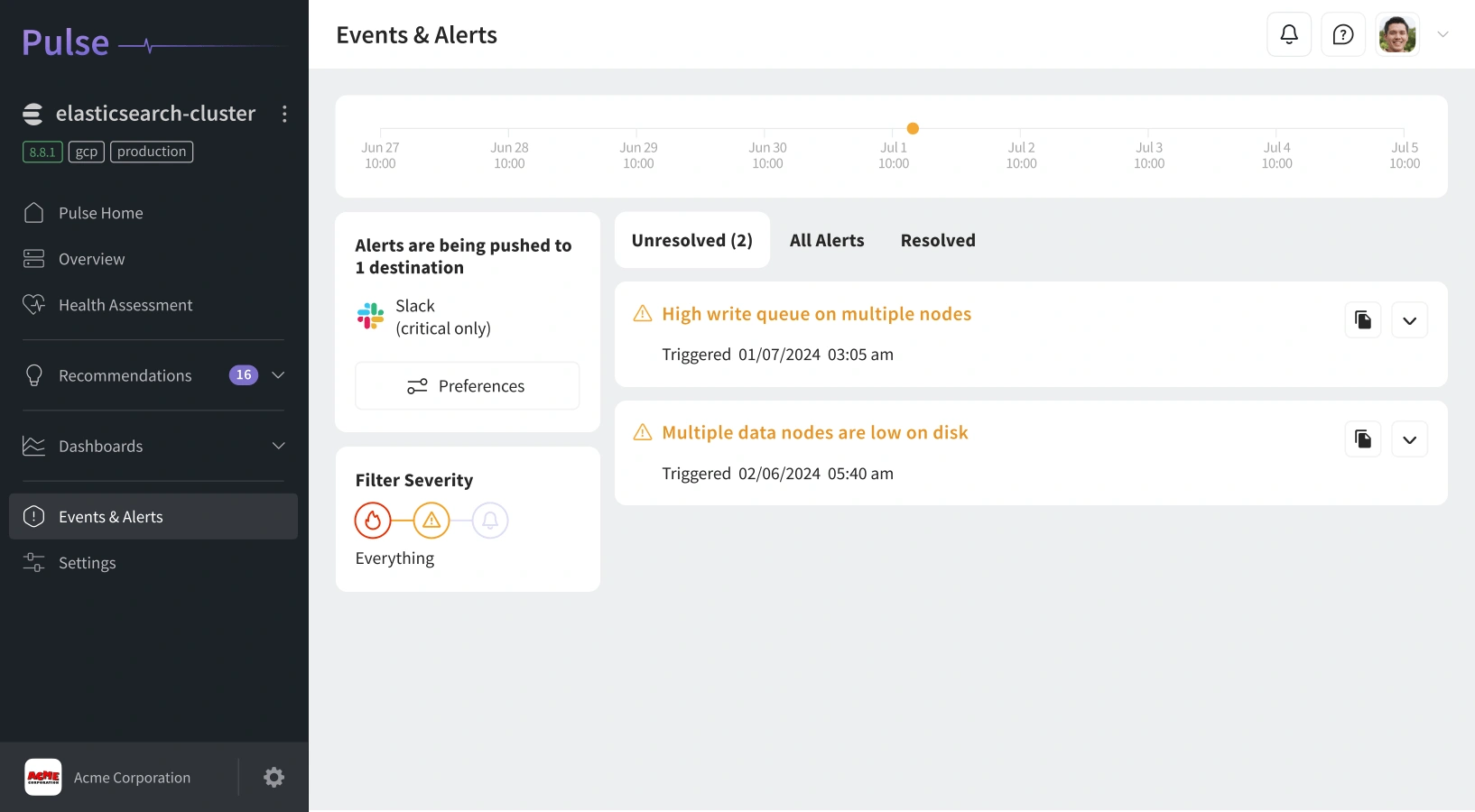
 Your cloud, your control: ClickHouse runs in your AWS, GCP, or Azure account, against your VPC, with your IAM and your data residency rules. The data plane never leaves your perimeter. No third-party vendor can decide to shut you down.
 -
 No double margin: You pay your cloud provider for compute and storage at list price (or with your committed-use discount). You do not pay a managed-service markup on top of cloud costs.
 -
 100% upstream ClickHouse: Every feature in the open source ClickHouse release is available, with no proprietary fork between you and the upstream community. The same DDL, the same engines, the same SQL, the same on-disk format.
What Pulse provides
The managed-service experience, without the managed-service vendor
-
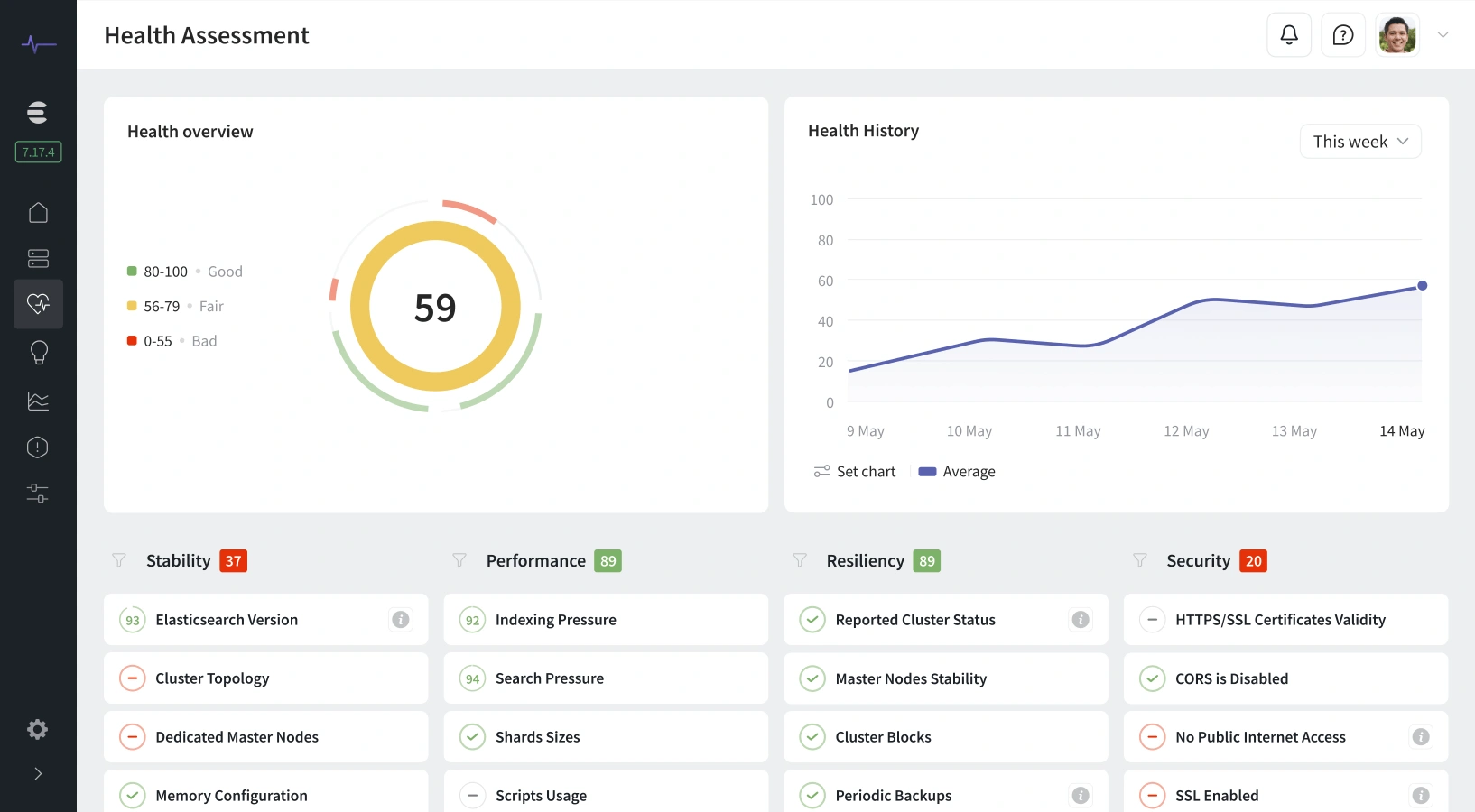
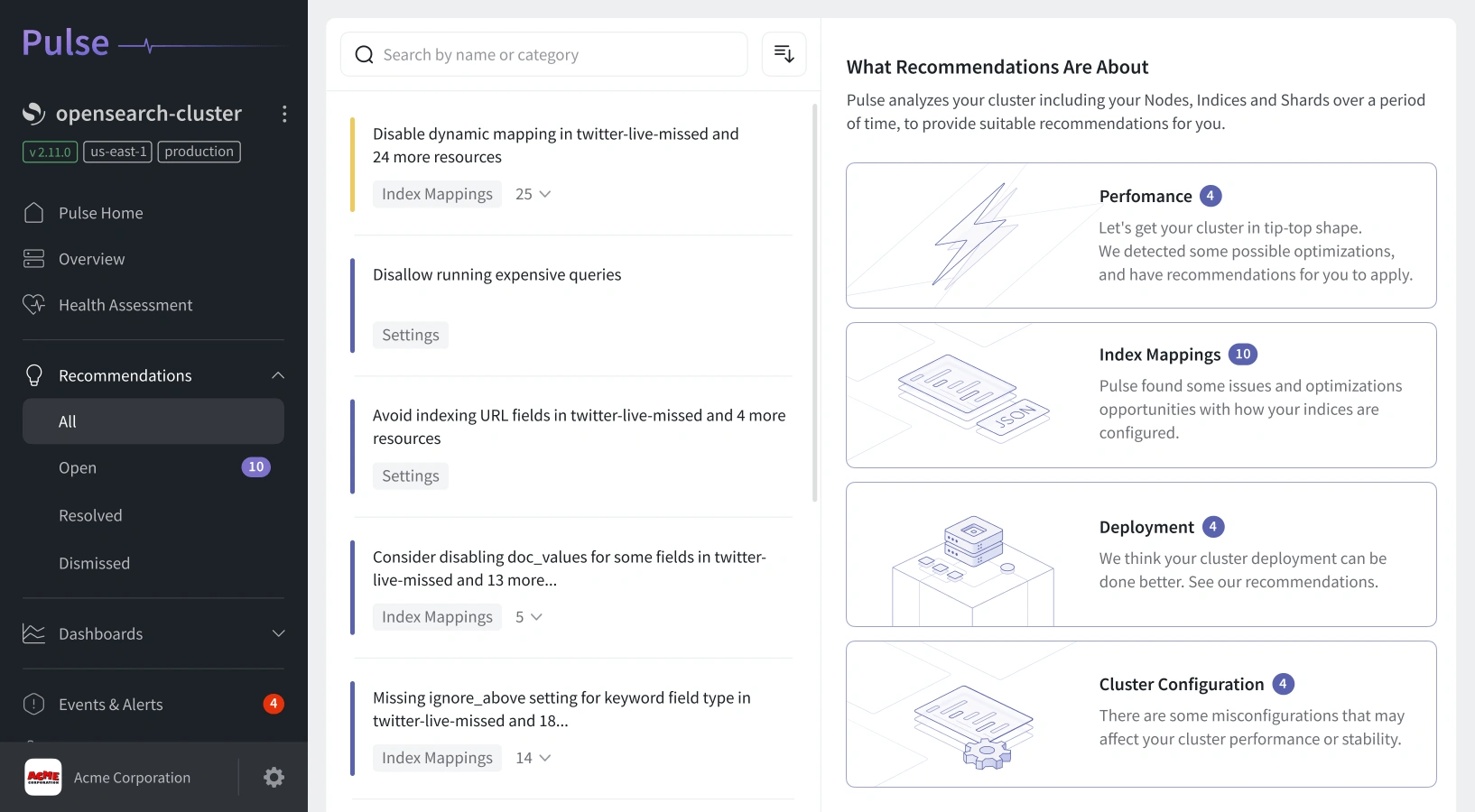
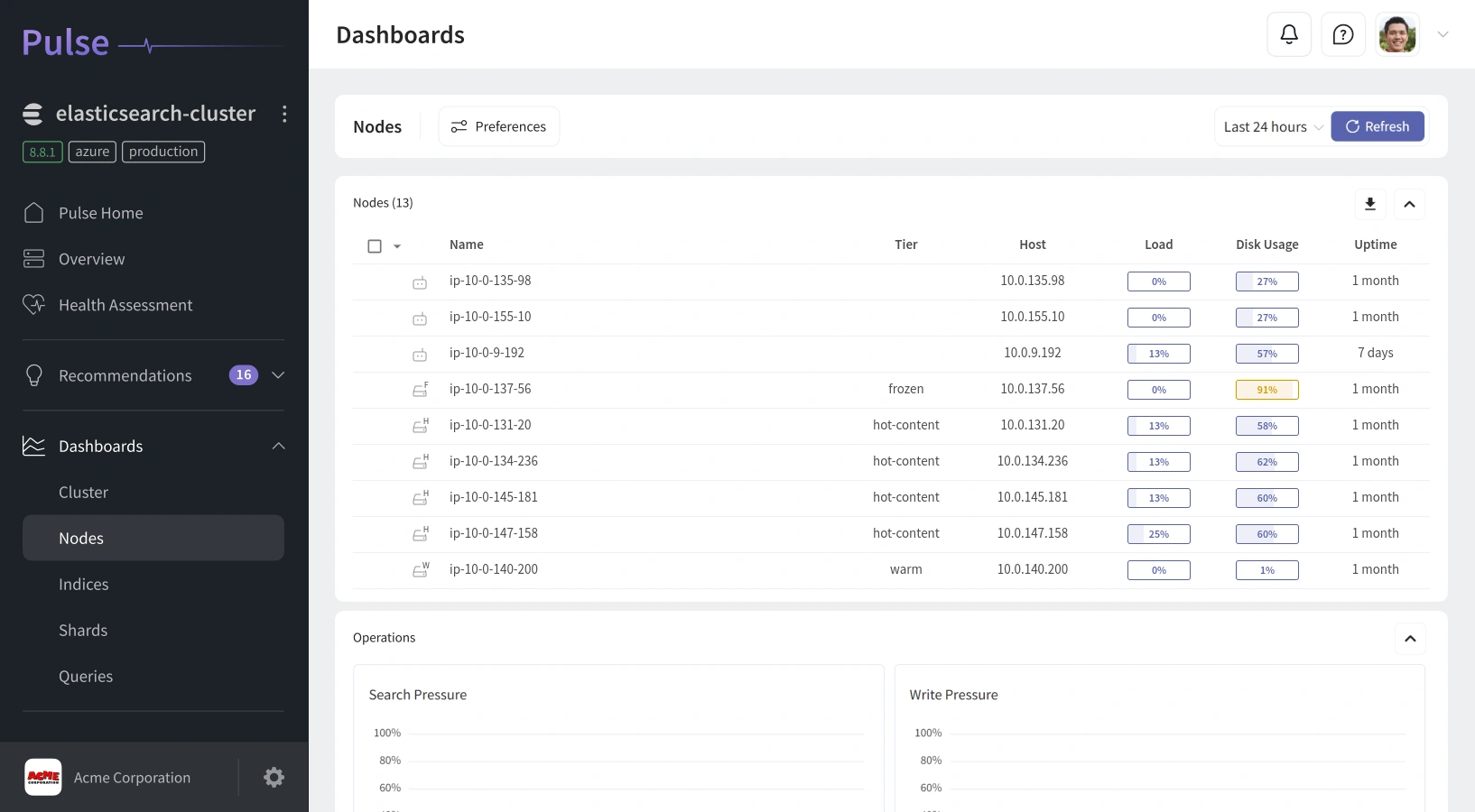
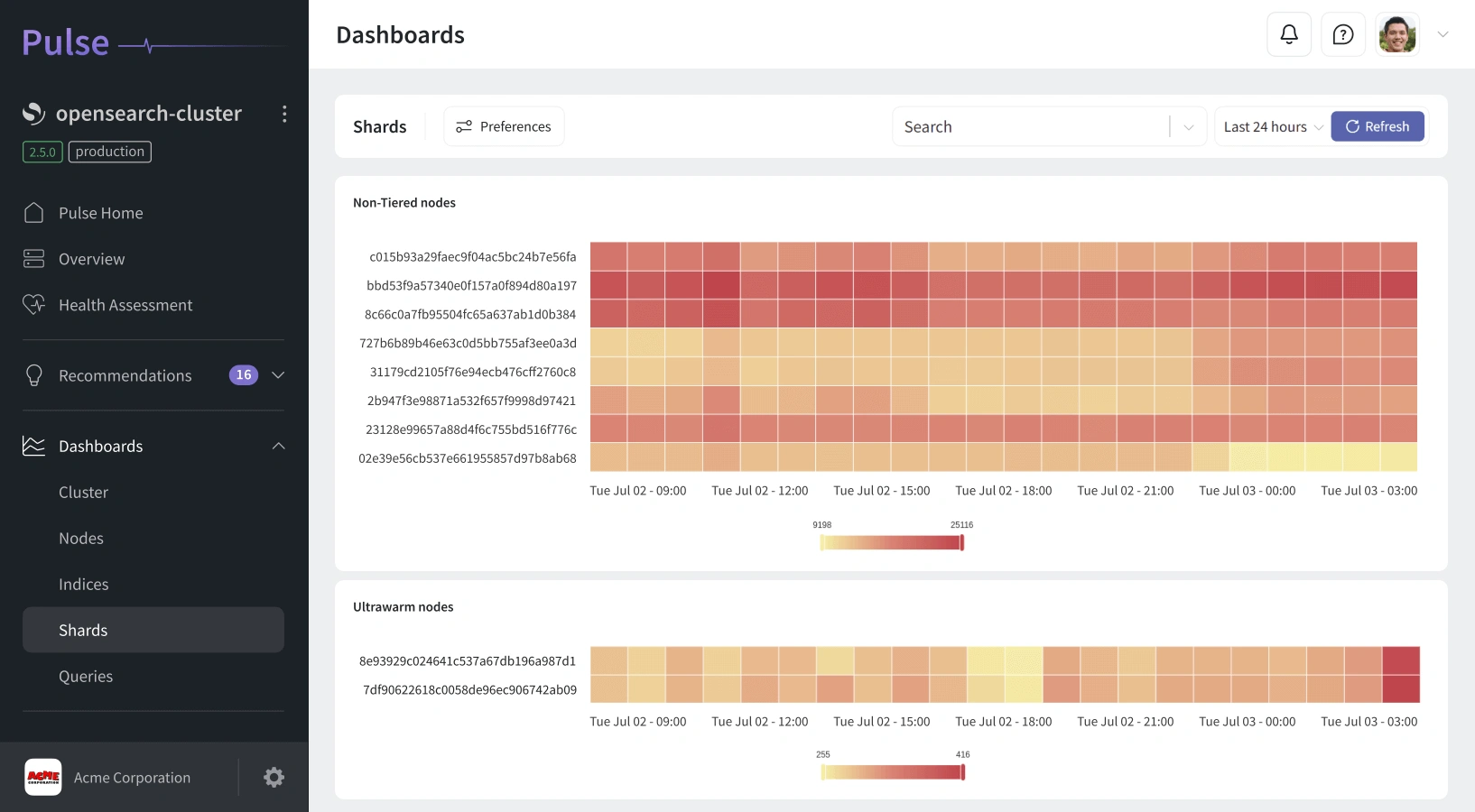
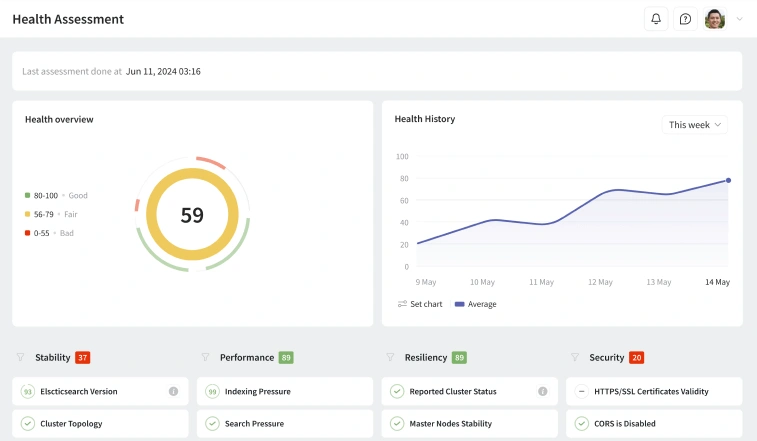
 Continuous health assessments: Pulse analyzes every table, every merge, every part-count trend, and every access entity on your cluster. You get prioritized recommendations on oversharded tables, missing TTLs, stale ILM-equivalent retention, RBAC drift, and shard-size health, all of it specific to ClickHouse rather than generic database checks.
 -
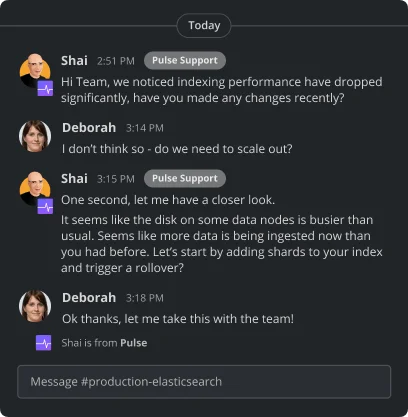
 AI SRE plus human expertise: The platform surfaces issues automatically. Behind it, Pulse engineers who have run ClickHouse in production at scale are available to validate the recommendations, take incident calls, and pair on tricky migrations.
 -
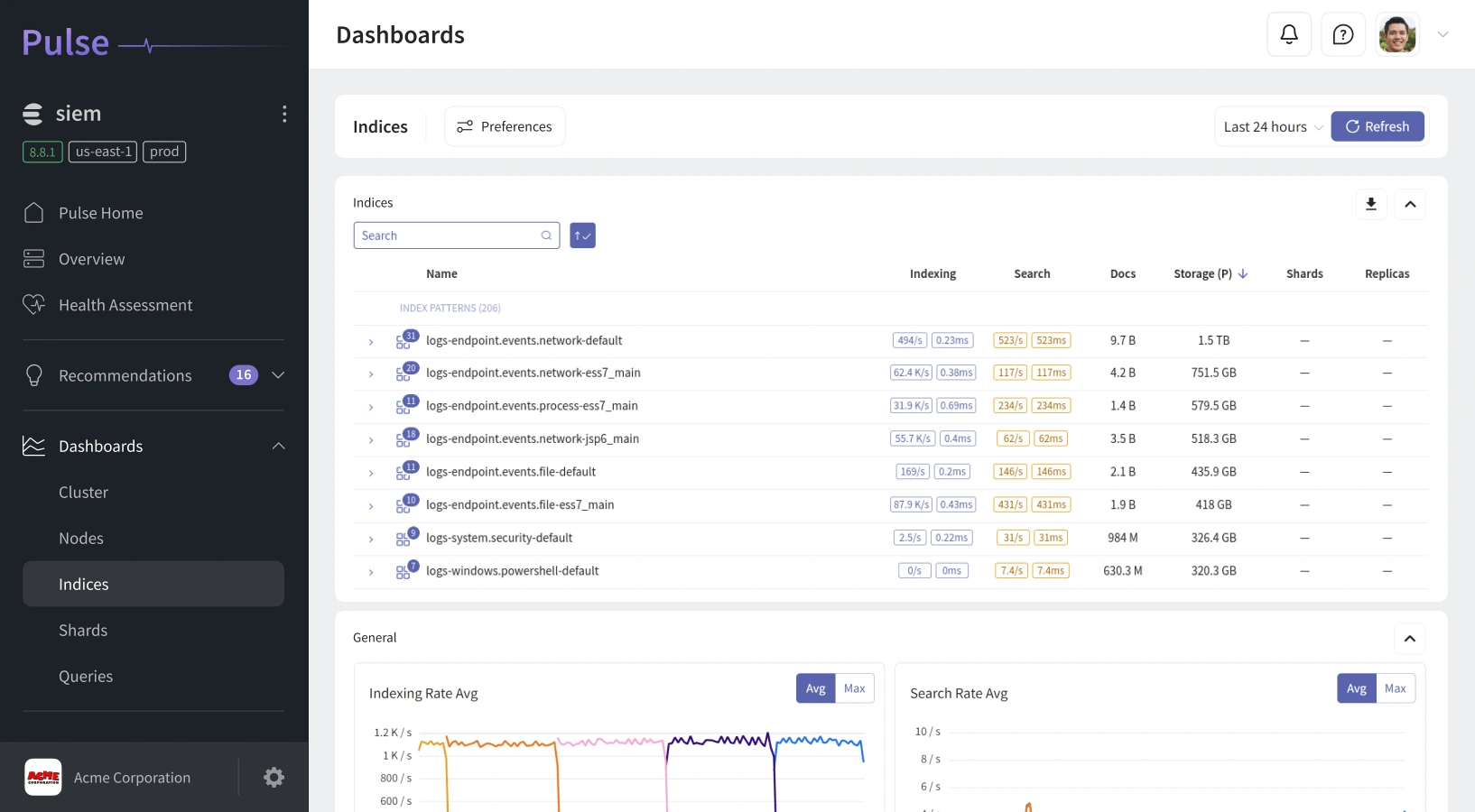
 Query analytics and cost optimization: Pulse traces query patterns, identifies the queries driving cluster cost, and recommends index, projection, and materialized view changes that reduce both latency and spend, on the cluster you own.
Migrating from DoubleCloud
A short, well-trodden path
- 1. Stand up ClickHouse in your cloud. On Kubernetes via the Altinity operator, on EC2/GCE with Terraform, or on bare metal. Pulse engineers can validate the topology before you cut over.
-
2. Replicate or export your data.
For most teams,
clickhouse-copier, nativeremote()table functions, or per-partitionINSERT SELECTare the right tools. For Kafka-backed pipelines, point the producers at the new cluster and replay if needed. - 3. Recreate users, roles, and row policies. DoubleCloud's RBAC was upstream ClickHouse RBAC. CREATE USER, CREATE ROLE, and GRANT all work the same way on the new cluster.
- 4. Connect Pulse. Read-only credentials and a network path. Pulse begins surfacing recommendations within minutes.
- 5. Cut over. Flip producers, validate query results, and decommission the old DoubleCloud cluster before its retention window closes.
Common questions from DoubleCloud customers
Is BYOC ClickHouse harder to run than a managed service?
Without an SRE layer, yes: there are knobs around merges, parts, replication, and storage policies that production clusters need someone watching. With Pulse running the assessment and on-call coverage, the day-to-day operator experience is comparable to a managed service, with full cloud-account control and none of the vendor risk.
Can I keep using ClickHouse Keeper instead of ZooKeeper?
Yes. ClickHouse Keeper is the recommended coordination service for modern deployments and is a drop-in for ZooKeeper. Pulse covers Keeper health as part of the standard assessment.
What about Managed Kafka and Managed Airflow?
Both have strong open-source-in-your-cloud equivalents: Strimzi, MSK, or Confluent Cloud for Kafka; Apache Airflow on Kubernetes or MWAA for Airflow. Pulse focuses on the data engine layer (ClickHouse, Elasticsearch, OpenSearch); we'll point you at the right partners or operators for the surrounding stack.
How fast can the migration happen?
For most teams, a working replica of the production cluster is up within a week, with the full cutover taking two to four weeks depending on data volume and the number of producers and dashboards that need to be redirected. Pulse engineers can pair on the migration.